Anthem: Reimagining Everett’s Commercial Triangle Through Landscape-Led Urban Redevelopment
Anthem is a transformative mixed-use residential development located in Everett, Massachusetts, within the City’s evolving Commercial Triangle district. Historically defined by industrial, manufacturing, and warehouse uses, the Commercial Triangle long functioned as a utilitarian zone, disconnected from surrounding neighborhoods and underleveraged despite its proximity to downtown Everett and regional transit corridors. Aging infrastructure, fragmented parcels, and environmental constraints contributed to decades of underinvestment, leaving the area physically and socially detached from the City’s broader urban fabric.
In 2018, Everett initiated a comprehensive rezoning effort aimed at repositioning the Commercial Triangle as a high-density, mixed-use neighborhood that could support the City’s rapid growth, diversify housing options, and strengthen connections to transit and public space. Anthem emerged as one of the most significant early projects to advance this vision. As the largest residential development in the district to date, the project plays a critical role in redefining both the physical character and public perception of this formerly industrial area.
Situated adjacent to a future Silver Line Bus Rapid Transit expansion, the site presented a rare opportunity to demonstrate how landscape architecture and urban design can lead the transformation of a brownfield site into a vibrant, people-centered environment. Anthem is not simply a residential project — it is a landscape-driven framework for neighborhood revitalization.
An Integrated Team
Bohler provided comprehensive planning, site civil engineering, and landscape architecture services for the Anthem development, spanning from early planning and conceptual design through construction documentation and implementation support. The scope of work included:
- Master planning and site design coordination
- Streetscape and public realm design
- Plaza and amenity space design
- Pedestrian circulation and connectivity planning
- Open space programming and placemaking
- Planting design and material selection
- Coordination with site civil engineering, architecture, and municipal agencies
- Integration of sustainability and green infrastructure strategies
Working as part of an integrated, multidisciplinary team, our role was to ensure that the outdoor environment served as the connective tissue between buildings, streets, and the surrounding neighborhood.
Creating a People-Focused Public Realm
From the outset, the project team established clear goals to guide the design process. At its core, Anthem sought to transform an isolated industrial parcel into a livable, walkable, and socially engaging community that would support Everett’s long-term growth. The landscape architecture was instrumental in achieving these goals, with priorities that included:
- Creating a strong public realm that encourages pedestrian activity and social interaction
- Supporting multimodal transportation and future transit investments
- Providing high-quality outdoor amenities that enhance resident well-being
- Integrating sustainability and resilient design strategies
- Establishing a distinctive identity that reflects both the site’s history and its future
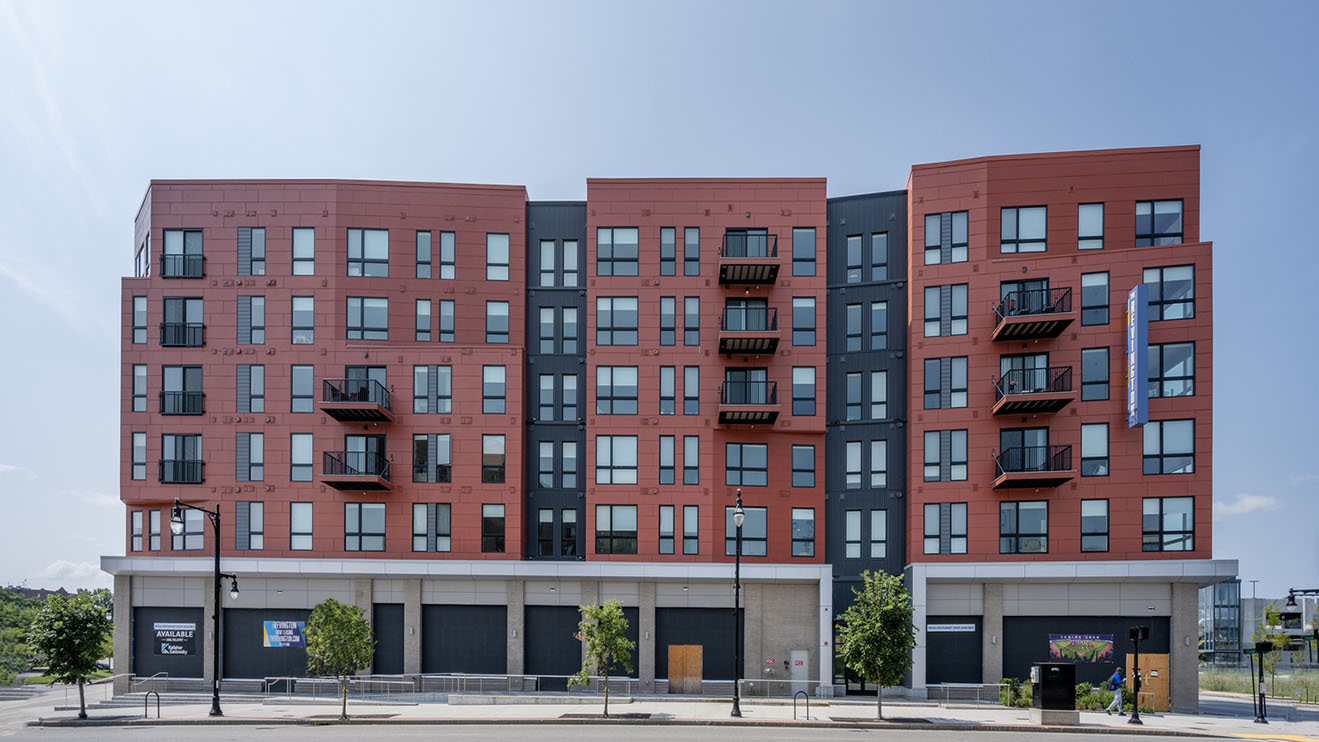
The development delivers 450 residential units, including 23 affordable apartments, addressing the region’s critical housing demand while promoting inclusivity. Ground-floor retail and publicly accessible open spaces further reinforce the project’s role as a neighborhood anchor rather than a standalone residential complex.
Establishing Connectivity
The design process was rooted in a careful analysis of the site’s constraints and opportunities. Given the site’s industrial past, early efforts focused on understanding environmental conditions, grading limitations, and infrastructure requirements. These technical realities informed a design approach that emphasized flexibility, durability, and long-term performance.
A key objective was to seamlessly integrate the project into the surrounding street network while prioritizing pedestrian comfort and safety. The landscape design introduces widened sidewalks, street trees, bicycle lanes, and clearly defined pedestrian pathways that encourage movement through and around the site. These improvements not only support daily resident use but also anticipate increased activity associated with the future Silver Line expansion.
At the heart of the development is a welcoming front plaza that serves as a gateway between the building and the street. Designed as an active urban space, the plaza incorporates seating, bicycle racks, accessible walkways, and retail frontage that animates the streetscape throughout the day. Material choices and planting design were carefully selected to balance durability with warmth, creating a space that feels both contemporary and inviting.
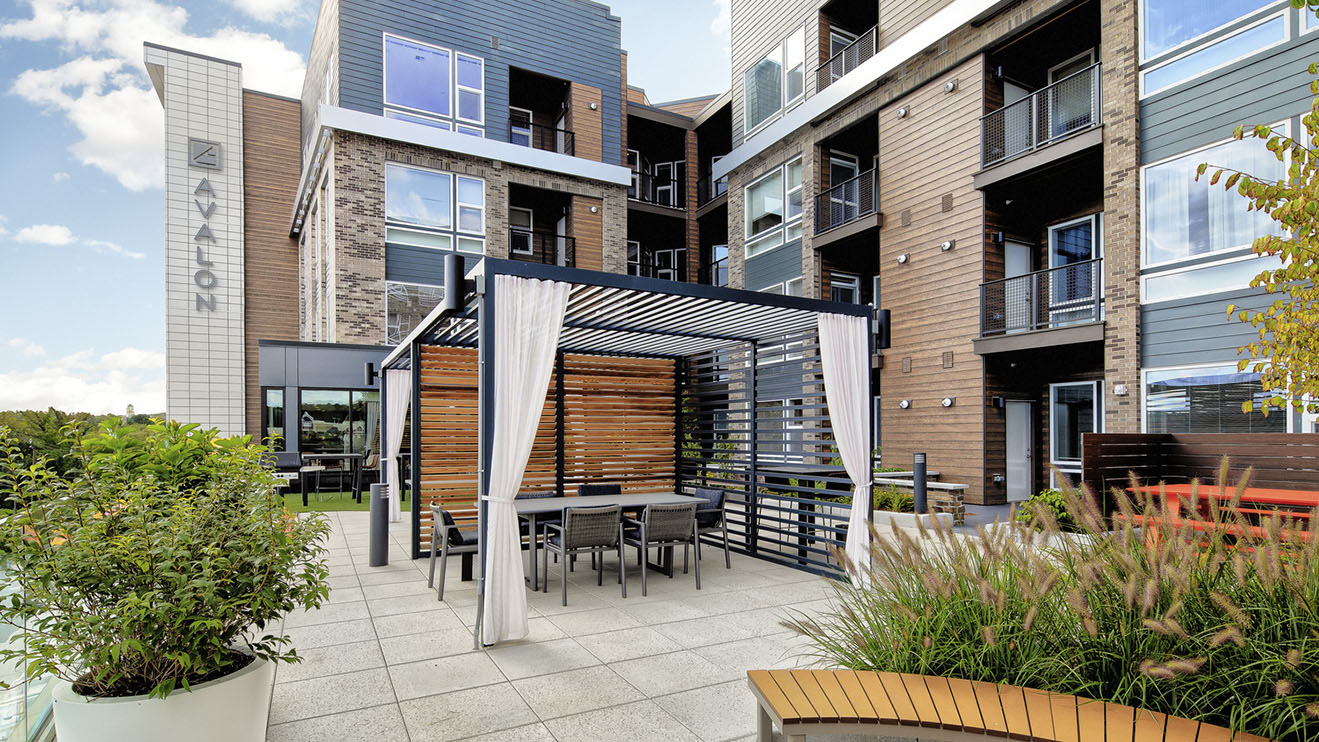
Beyond the public realm, the project features a series of highly programmed outdoor amenity spaces tailored to a diverse residential population. These include a movie lawn, climbing wall, co-working terraces, outdoor fireplaces, and a community garden. Each space was designed to accommodate multiple uses and age groups, encouraging interaction while allowing for quieter moments of respite.
A Detailed Design Approach
The landscape architecture at Anthem is defined by its layered approach to placemaking. Public, semi-public, and private outdoor areas are clearly articulated yet visually connected, reinforcing a sense of openness and continuity.
Planting design plays a central role in softening the project’s urban scale. Native and adaptive species were selected to provide seasonal interest, support biodiversity, and reduce irrigation demands. Trees are strategically placed to provide shade along pedestrian routes and gathering areas, improving thermal comfort and walkability.
Lighting design was integrated early in the process to enhance safety and usability without overwhelming the site. Accent lighting highlights architectural and landscape features, while pedestrian-scale fixtures ensure visibility along pathways and plazas.
Sustainability strategies are woven throughout the landscape design. Permeable surfaces and green infrastructure elements help manage stormwater on-site, reducing runoff and supporting municipal systems. These features not only improve environmental performance but also serve as visible expressions of the project’s commitment to responsible development.
Balancing Density and Open Space
Transforming a former industrial brownfield into a dense residential community presented both expected and unforeseen challenges. Environmental remediation was a critical early step, requiring close coordination with environmental consultants and regulatory agencies to ensure the site was safe for residential use.
The project’s scale and density also required careful consideration of how outdoor spaces could remain comfortable and functional. Balancing building massing with adequate open space demanded a highly efficient layout, where every square foot of landscape served multiple purposes. Through iterative design and collaboration with the architectural team, the landscape spaces were optimized to provide meaningful amenities without compromising circulation or accessibility.
Another challenge was aligning the project with community expectations. As one of the first major developments under the new zoning, Anthem set a precedent for future projects in the Commercial Triangle. The design team worked closely with City officials and stakeholders to ensure that the project’s public realm improvements supported broader planning goals and contributed positively to the neighborhood.
Lasting Impact
Anthem’s impact extends beyond its physical boundaries through a series of community-focused initiatives. Public art plays a prominent role in establishing the project’s identity and activating the streetscape. Two large-scale murals — one along the Second Street façade and another within the interior amenity courtyard — celebrate local creativity and provide visual interest at both the neighborhood and resident scale.
The developer has also committed to workforce development and community engagement programs, including a $125,000 contribution to the Mayor’s Everett Summer Youth Job Program. Annual career education initiatives and volunteer events further strengthen connections between the development team and the local community, reinforcing the project’s role as a long-term neighborhood partner.
Today, Anthem stands as a model for landscape-led urban redevelopment. By transforming a blighted industrial site into a vibrant, transit-oriented community, the project demonstrates how thoughtful landscape architecture can shape not only outdoor spaces but also social, economic, and environmental outcomes.
The development’s pedestrian-friendly streetscapes, active plazas, and diverse amenity spaces foster daily interaction and enhance quality of life for residents and visitors alike. Its integration with transit infrastructure positions the project to support sustainable growth well into the future.
Perhaps most importantly, Anthem has helped redefine expectations for the Commercial Triangle. It illustrates how former industrial districts can evolve into complete neighborhoods — places where people live, gather, and connect — through intentional design and collaboration.
Create Project Momentum
Our approach makes a meaningful difference for our most ambitious clients. Contact us to learn more.
Let's Get Started