Stay in the Know
Get our insights and latest news straight to your inbox.
In a recent NJBIZ feature article, Bohler’s team shared insights into the design and engineering behind The Pingry School’s transformation into a FIFA World Cup 2026 training site.
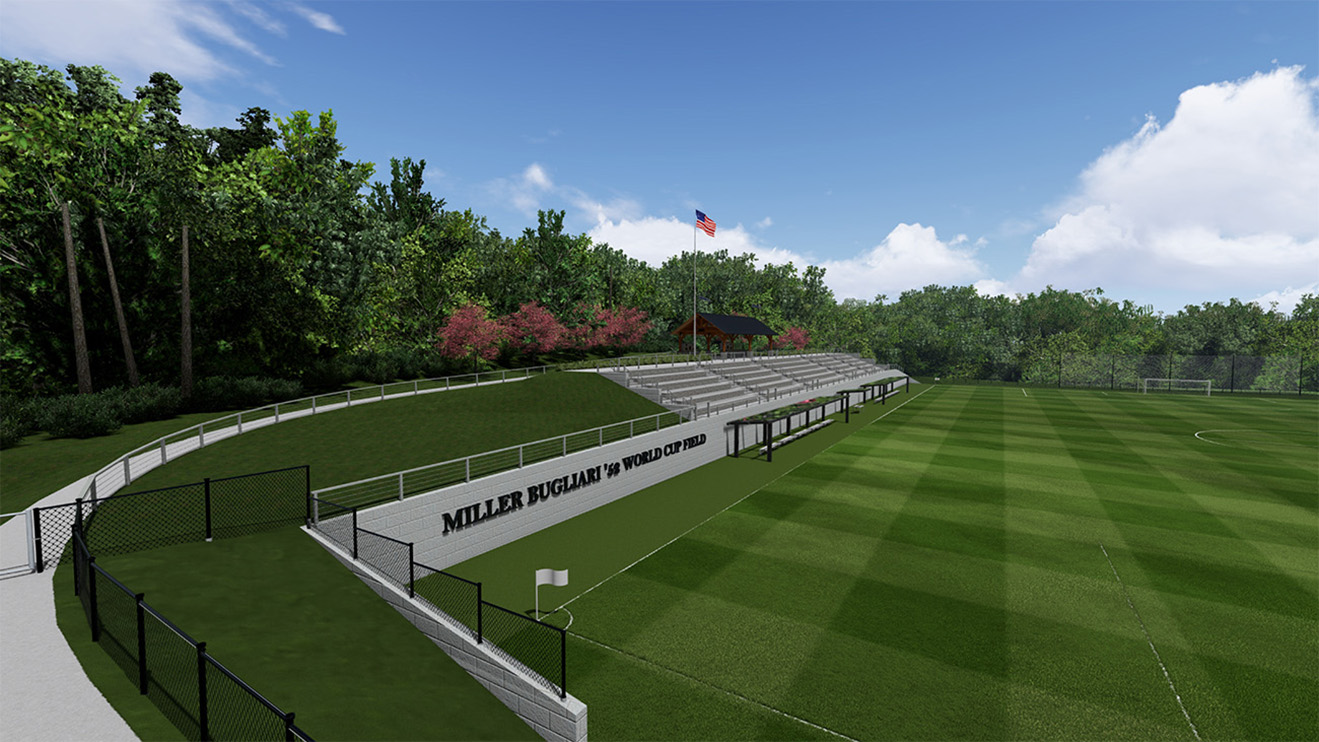
In preparation to host Team Morocco during the tournament, the school teamed with Bohler’s integrated planning, engineering, and landscape architecture teams to complete a series of major campus upgrades.
Key improvements included expanding the Miller A. Bugliari ’52 World Cup Field, constructing a second practice field, and creating enhanced spectator areas with elevated pavilions.
Designing a World Cup-caliber training facility required far more than a traditional athletic field layout. FIFA’s rigorous standards included detailed performance requirements for drainage, field conditions, and playability to ensure athletes could safely return to the field shortly after heavy rain events.
“They do have specific requirements and regulations that get very detailed,” said Bryan Ehnes, Senior Project Manager at Bohler, noting that the field had to drain quickly enough for practice to resume within hours after a storm.
To meet those standards, Bohler’s team coordinated complex subsurface drainage systems, specialized soil compositions, and turf specifications designed to support both player safety and the pace of play. Every layer beneath the surface was engineered to help the field perform at an international level.
The success of the project relied on close collaboration between Bohler’s site civil engineering and landscape architecture teams, balancing technical performance with the overall campus experience.
“It matters that Bryan is a civil engineer and I’m a landscape architect,” said Adam Alexander, Director of Planning and Landscape Architecture. “He’s looking at things from an engineering perspective, making sure that the drainage works, while I’m focused on how people use the space and what it looks like.”
That integrated approach was critical on a project where every detail had to meet FIFA’s performance standards while also creating a welcoming environment for athletes, spectators, and the campus community.
The team also focused on designing improvements that felt like a natural extension of Pingry’s existing campus character. By incorporating architectural and landscape elements already present on site, the upgraded facilities were designed to serve the school well beyond the World Cup and remain a lasting destination for students and visitors alike.
For Bohler’s team, the project represented more than a complex design challenge. It was an opportunity to contribute to one of the world’s largest sporting events and see their work become part of an international stage.
“What an honor just to be in support of one of the world’s largest sporting events,” said Adam. “And then we’re going to see some of the best professional soccer players in the world playing on it.”
For both Adam and Bryan, seeing the fields completed and actively used brought a new level of appreciation for the impact thoughtful design can have on athletes, schools, and communities.
“I played soccer all my life,” said Bryan, “so to be able to say I worked on a facility that one of the top teams in the world is utilizing during the World Cup is pretty awesome.”
With FIFA World Cup 2026 approaching, the completed facilities are ready to support athletes on an international stage while serving the Pingry community for years to come. Read the full NJBIZ article here.
Get our insights and latest news straight to your inbox.