Stay in the Know
Get our insights and latest news straight to your inbox.
For developers, delaying engagement with a planner or landscape architect until after site design is underway can mean missed opportunities to maximize return on investment.
Planners and landscape architects bring a unique perspective — balancing end-user experience, site constraints, and long-term project goals. By involving them at the conceptual stage, you create room to incorporate strategic ideas that can enhance your project’s value, including:
This early collaboration allows teams to anticipate challenges, design smarter, and move projects forward more efficiently, giving developers confidence that their vision will succeed. Below are six scenarios where engaging a landscape architect during conceptual site design can have the greatest impact.
Landscape architects excel at turning a site’s natural features into opportunities. At the conceptual stage, integrating existing elements is easier, before they’re removed or permanent structures limit flexibility. When natural features pose challenges, early collaboration allows the team to find cost-effective solutions that preserve and enhance the site.
This 160-unit luxury apartment building anchors a vibrant mixed-use redevelopment near Westfield Garden State Plaza, developed by Tulfra Real Estate with Bohler’s planning and landscape architecture support.
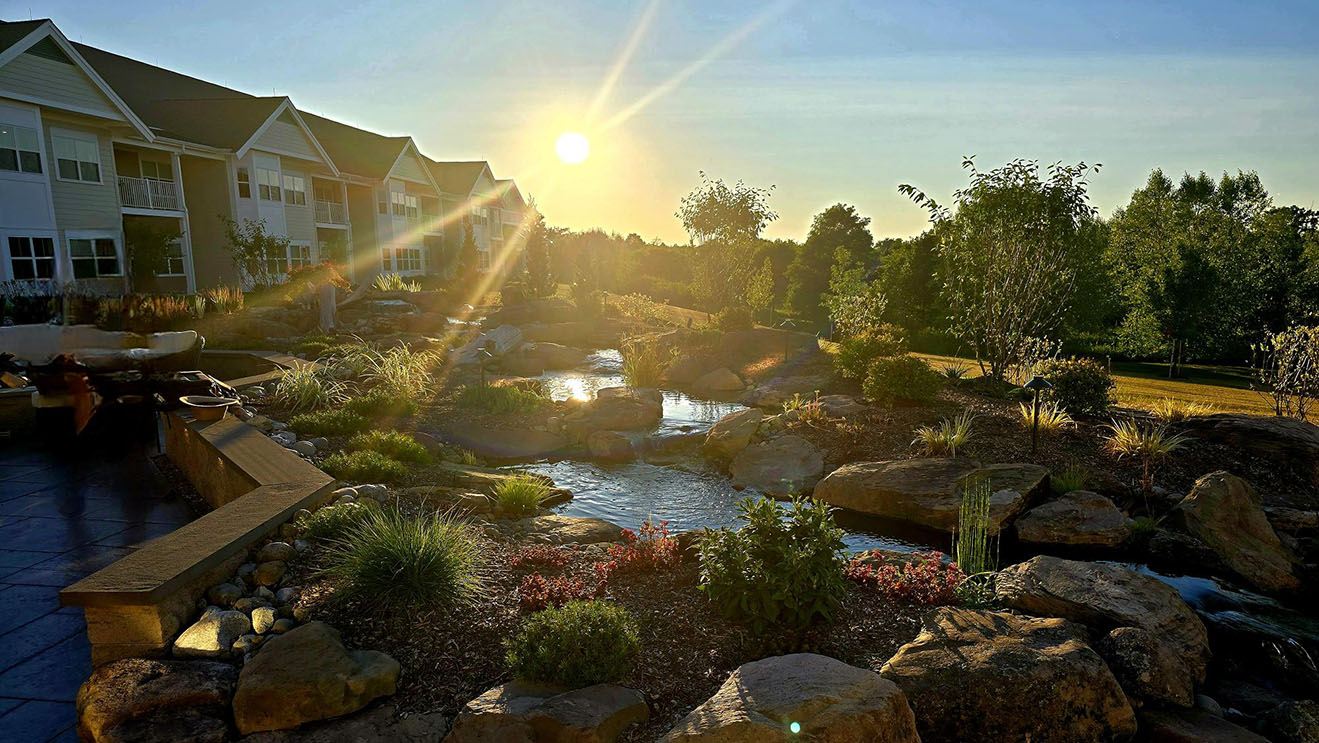
Bohler’s team created exceptional private and public outdoor spaces, blending functionality, aesthetics, and resident engagement. These included a second-story amenity courtyard with resort-style pool, lounge seating, fire pits, and outdoor kitchen, private patios and a turf exercise area catering to diverse resident needs.
A key natural feature — an on-site pond — was preserved and enhanced. Bohler designed a fishing and viewing platform, interpretive historical signage, improved landscaping, and site furnishings, creating a serene public park that encourages recreation and community connection.
Historic industrial neighborhoods, whether former mills, waterfront warehouses, or repurposed factories, are high-demand destinations for tenants and residents seeking character, walkability, and unique experiences. For developers, these districts offer more than charm: they provide opportunities to capture premium rents, leverage creative financing, and differentiate projects in competitive markets.
Successful adaptive reuse requires balancing historic preservation with contemporary design, building codes, and a sense-of-place that meets modern expectations. Projects that retain character, integrate sustainable infrastructure, create engaging streetscapes, and earn community trust unlock long-term value, reduce risk, and enhance marketability.
Revitalizing this site required navigating multiple challenges, including avoiding impacts to the French Creek floodway, restoring a historic footbridge, and incorporating an underground canal system that once regulated water flow for the mill.
The rehabilitated footbridge, originally connecting the foundry to the mill’s Wage House, was repurposed to provide pedestrian access to local restaurants and boutiques, enhancing community connectivity. Bohler also extended a public trail system through the Riverworks site, with future plans linking to the Schuylkill River Trail, providing continuous access to Philadelphia via an elevated bridge over the canal and through a tunnel.
For many land development projects, speed-to-market is critical. On aggressive entitlement timelines, engaging a landscape architect early and working collaboratively with engineers can streamline plan reviews, approvals, and construction sequencing.
Bohler’s planning and landscape architecture team joined the project at the conceptual stage, preparing conceptual designs, streetscape details, and other exterior features during site plan development. Incorporating landscape design into the land development plan allowed the team to expedite approvals and secure permits more quickly.
Early involvement also streamlined construction:
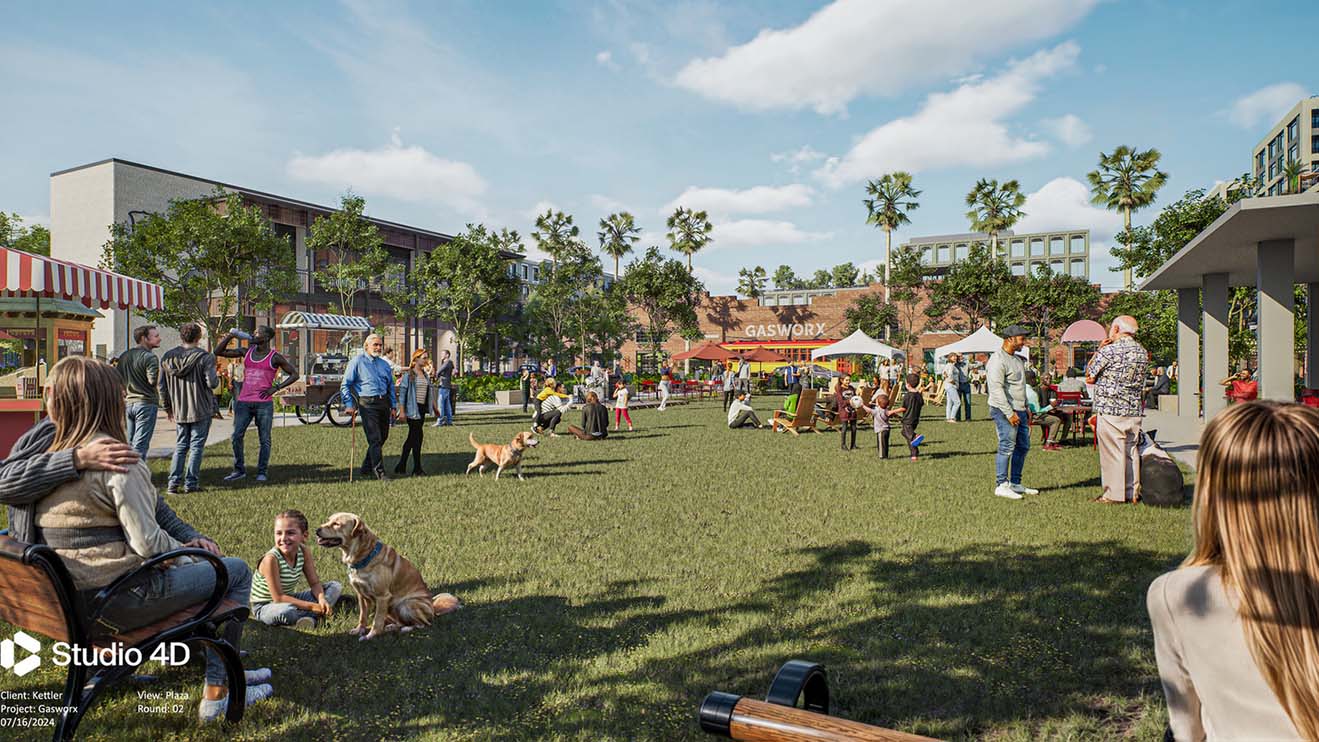
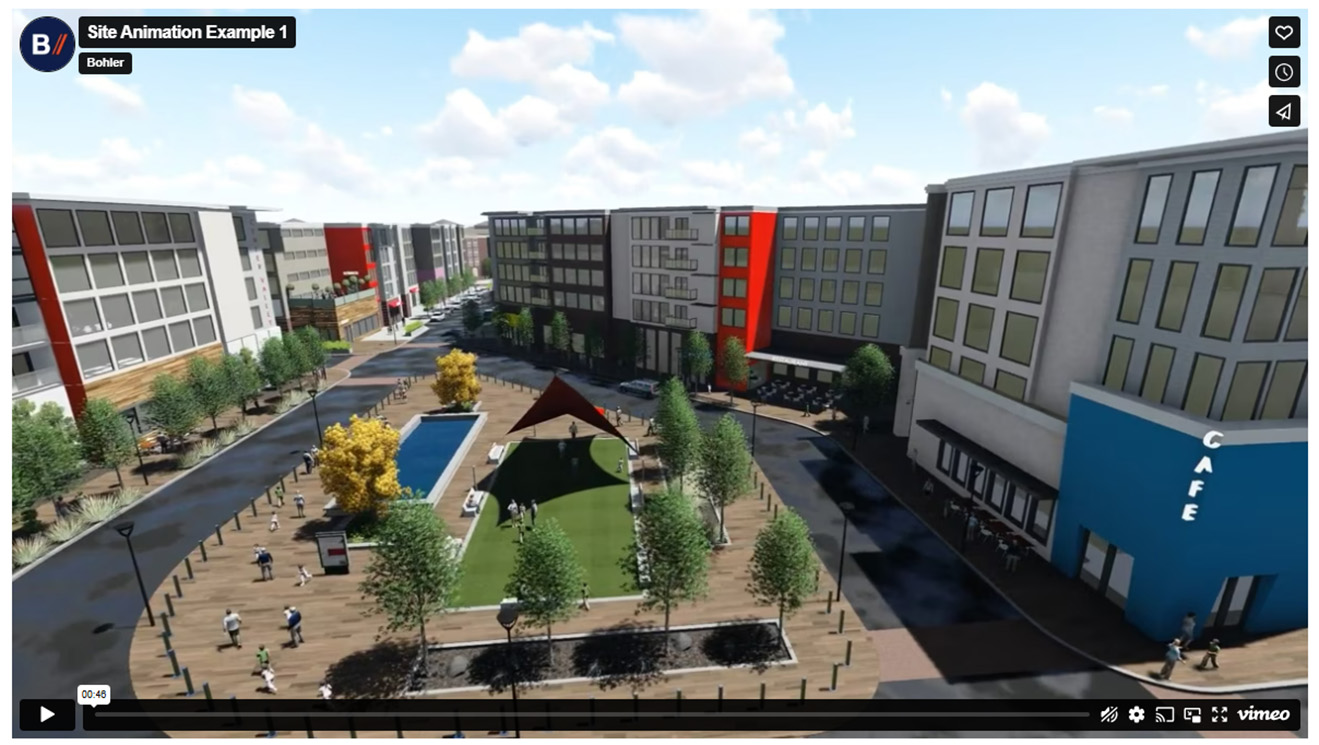
Communicating design ideas to non-technical stakeholders can be challenging without visuals. Engaging a landscape architect early allows developers to use sketches, 3D models, and immersive renderings to illustrate the future development, build consensus, and gain support.
This project involved multiple stakeholders, including the client, their architect, and an additional congregational architect, making collaboration and clear communication essential. Bohler’s team leveraged SketchUp, LUMION rendering software, and Oculus virtual reality to create immersive 3D models and panoramas that brought the site to life.
Key features, such as a sensory garden, retaining wall, and contemplative labyrinth, were highlighted through walk-through animations, helping stakeholders understand spatial relationships and design intent. This technology enabled efficient feedback and revisions, ensuring the process stayed on track while incorporating diverse perspectives.
The result was a highly collaborative experience, a more engaged client, and designs that truly reflected both the vision and the community’s input.
In competitive markets, whether multifamily, retail, or office, unique amenities and experiential design can set a project apart. Engaging a landscape architect early allows collaboration with engineers and architects to generate distinctive features that can be marketed as a competitive advantage.
This award-winning, 425-unit mixed-income rental community transformed an underutilized office complex into a vibrant, environmentally conscious flagship development for BNE. Stonehill prioritizes adaptive reuse, community-focused amenities, and ecological sensitivity, earning recognition from New Jersey Future’s Smart Growth Awards.
Bohler’s team designed a 23,000-square-foot outdoor pool courtyard, the largest pool in BNE’s portfolio, with a wet deck and seating ledges. The site’s challenging topography and existing wetlands were addressed through riparian buffer protection, strategic plant selection, and integrated rain gardens for stormwater management. Community-forward features include two dog parks, walking paths, landscape lighting, and wind art sculptures, enhancing recreational, aesthetic, and ecological value.
Delivering a highly tailored user experience starts at the conceptual phase. While architects and engineers may consider function, a landscape architect shapes how a facility is experienced — designing for comfort, clarity, and connection. By integrating considerations like intuitive wayfinding, sensory engagement, accessibility, and moments of respite, landscape architects help translate operational goals into meaningful, human-centered experiences. Engaging them during master planning ensures the final environment is not only functional, but purpose-built to support the specific needs of its users.
One of the biggest challenges in senior housing is balancing operational efficiency with resident experience while planning for evolving market demands, care models, and demographics.
At Christ’s Home, the outdoor terrace was designed to create a specialized resident experience, featuring dining areas, fire pits, water elements, and shade structures like pergolas and umbrellas. Bohler worked with the team to address mobility and accessibility at every level, including wide, clearly marked pathways, intuitive wayfinding, and seating for varying abilities. Utility stubs, weather-resistant materials, heating elements, and strategic lighting allow the terrace to be flexible and usable year-round.
The strongest projects happen when creative design and technical precision work hand in hand. By integrating planning, landscape architecture, site civil engineering, and permitting expertise from the start, we create places that are not only functional and efficient, but also meaningful experiences for the people who use them.
Where landscape architecture is often practiced in isolation, Bohler’s in-house collaboration offers a real advantage. Planners, landscape architects, civil engineers, and permitting specialists work side by side, sharing insights early, addressing challenges before they become problems, and advancing projects with a unified vision. Quick, direct access to technical and regulatory expertise allows our teams to navigate entitlement nuances, agency requirements, and approvals efficiently, reducing client risk.
Our integrated model also streamlines approvals. Civil, landscape, lighting, and permitting teams coordinate submissions, minimizing inconsistencies, reducing change orders, and avoiding the friction common when multiple consultants work separately. With rigorous internal QA/QC, every package is cohesive, accurate, and ready to move.
For developers seeking a competitive edge, this approach turns early collaboration into smarter design, faster approvals, and projects that deliver long-term value and lasting impact.

Get our insights and latest news straight to your inbox.